Psychedelic Morning News Brief
🍃 Ayahuasca-Assisted Therapy Shows Promise for Severe Grief
Synopsis: Researchers studied 84 adults experiencing severe grief within a year of losing a close family member. Participants received meaning reconstruction therapy combined with 2 Ayahuasca sessions, therapy alone or no treatment. Grief decreased in all 3 groups, but the Ayahuasca group showed significantly greater reductions, along with improvements in quality of life & post-traumatic growth. No serious adverse events were reported.
My take: After losing my brother, I worked with Samadhi, which contains the same molecules as Ayahuasca. The journey itself was challenging, but the clarity & insights that followed helped me process his death in a way nothing else had. That doesn’t prove Ayahuasca is an effective grief treatment, but this study resonates with my experience. Grief cannot be cured, but Ayahuasca may find a way to carry it.
 Karina Petrova
🇮🇱 Inside Israel’s MDMA Trial for Combat PTSD
Synopsis: Israel’s Metiv Center is conducting an MDMA-assisted therapy trial involving 60 former members of the security services whose PTSD did not respond adequately to previous treatments. The 3-to-4-month program includes 15 sessions, with 8-hour MDMA sessions followed by overnight observation & integration therapy. 17 participants have completed treatment, and a researcher says almost all experienced enough improvement to no longer meet the diagnostic criteria for PTSD.
My take: The most interesting part isn’t that MDMA makes people feel good…it’s that it may allow people to revisit horrifying memories without being swallowed by them. This affirms my experiences with MDMA. The participant accounts are powerful, but anecdotes & early investigator claims are not trial results.
 Shahar Ilan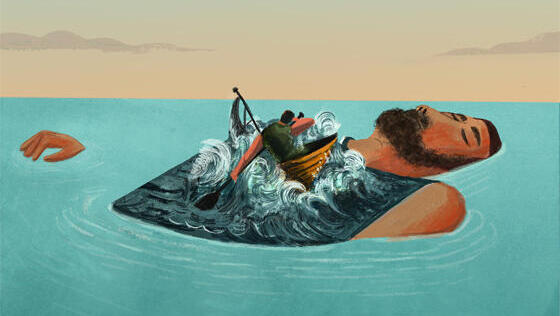
🧠 Age May Shape the Relationship Between Psychedelics & Mental Health
Synopsis: A cross-sectional study surveyed 1,088 adults about lifetime Psychedelic use & current mental health. Classic Psychedelic use was associated with lower anxiety & depression among younger adults, but the association weakened with age & was absent around age 50. Younger users were also more likely to report mystical experiences, which may partly explain the pattern. Well-being did not differ significantly between users & non-users.
My take: This does not prove Psychedelics work better for young people. The researchers compared lifetime drug use with current symptoms at a single point in time, so causation is impossible to establish. But it reinforces something Psychedelic research routinely underestimates: the person taking the drug matters as much as the drug.
 Dr. Priyom Bose, Ph.D.