The Fight to Keep Alcohol at the Center of Culture
The Psychedelic Blog is an independent media brand covering drugs, altered states & the culture surrounding them.
This week: Why the fight to keep alcohol at the center of culture has already lost.
Tomorrow will be 8 years since I quit alcohol.
Around this time each year, I think about how much my life improved after making that decision. Health improved, strength improved, aging slowed, sleep improved, social life improved, dating improved (this one surprises people…but few traits women admire more than discipline & agency), traveling improved…everything.
What surprised me wasn’t that life got better. It was how much better.
And I am not alone. Countless people I’ve spoken to express a similar surprise at how much easier & more fulfilling life becomes without booze.
When I quit 8 years ago, doing so was still considered novel. Not unheard of, but rare. Now, things have completely changed. Gen Z drinks less than any generation before them, alcohol sales are declining, and not a month goes by when I don’t hear from someone telling me they quit.
For the first time in decades, alcohol is no longer moving in one direction culturally. More people are questioning it, more are opting out, more are realizing they can keep everything they enjoy about life while removing the substance they were told was necessary to enjoy it.
But cultural winds never blow in one direction.
Alcohol is a deeply ingrained drug, and a lot of people don’t want to feel guilty about drinking, so “why alcohol is actually good for you” takes are on the rise. Some from people I used to respect.
One thing about internet culture is that if you affirm people’s worst instincts, you’ll get a lot of engagement. Tell people discipline matters, they’ll argue. Tell people exercise matters, they’ll resist. Tell people alcohol is holding them back, they’ll get defensive. Tell them the thing they already do is actually good for them, and they’ll share it with all their friends.
And that’s what makes the current backlash against quitting alcohol so interesting: it’s not really about alcohol. It’s about the discomfort people feel when they’re forced to confront that a habit they’ve built their lives around is not serving them nearly as much as they think.

The New Defense of Alcohol
For most of my life, criticism of alcohol was unusual. But over the past few years, as fewer people drink, defenses of alcohol are getting louder.
Not from bartenders or liquor companies…from intellectuals. Writers, academics & public thinkers who have suddenly become very concerned about the cultural consequences of people drinking less.
One of the more common arguments is that alcohol serves a unique social function. That it helps people connect, bond & overcome the barriers that prevent human intimacy.
The problem is that this argument is frozen in time.
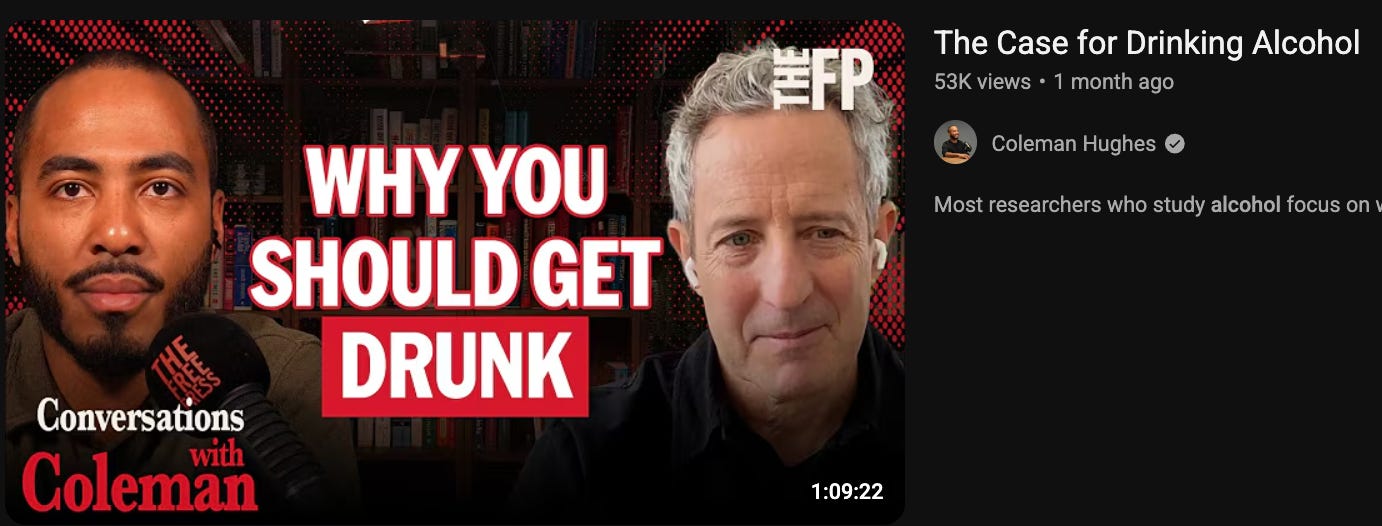
This is an incredibly out-of-touch take. It assumes alcohol is the only game in town while ignoring an entire landscape of alternatives. It reads less like serious analysis & more like a contrarian argument designed to sell books.
How much are you willing to bet Slingerland has never heard of Kanna? Or microdosing Psilocybin socially? Or the fact that MDMA is a prosocial drug whose benefits extend far beyond the dance floor?
The premise underlying these arguments is that alcohol occupies a unique role in human social life…it doesn’t. Alcohol is one method humans discovered for altering consciousness & facilitating connection. It is not the only one…it is simply the one our culture normalized.
Then there is the more overtly contrarian version of the alcohol defense.
The argument that drinking is somehow being unfairly maligned, that concerns about alcohol are overblown & that abstinence has gone too far.
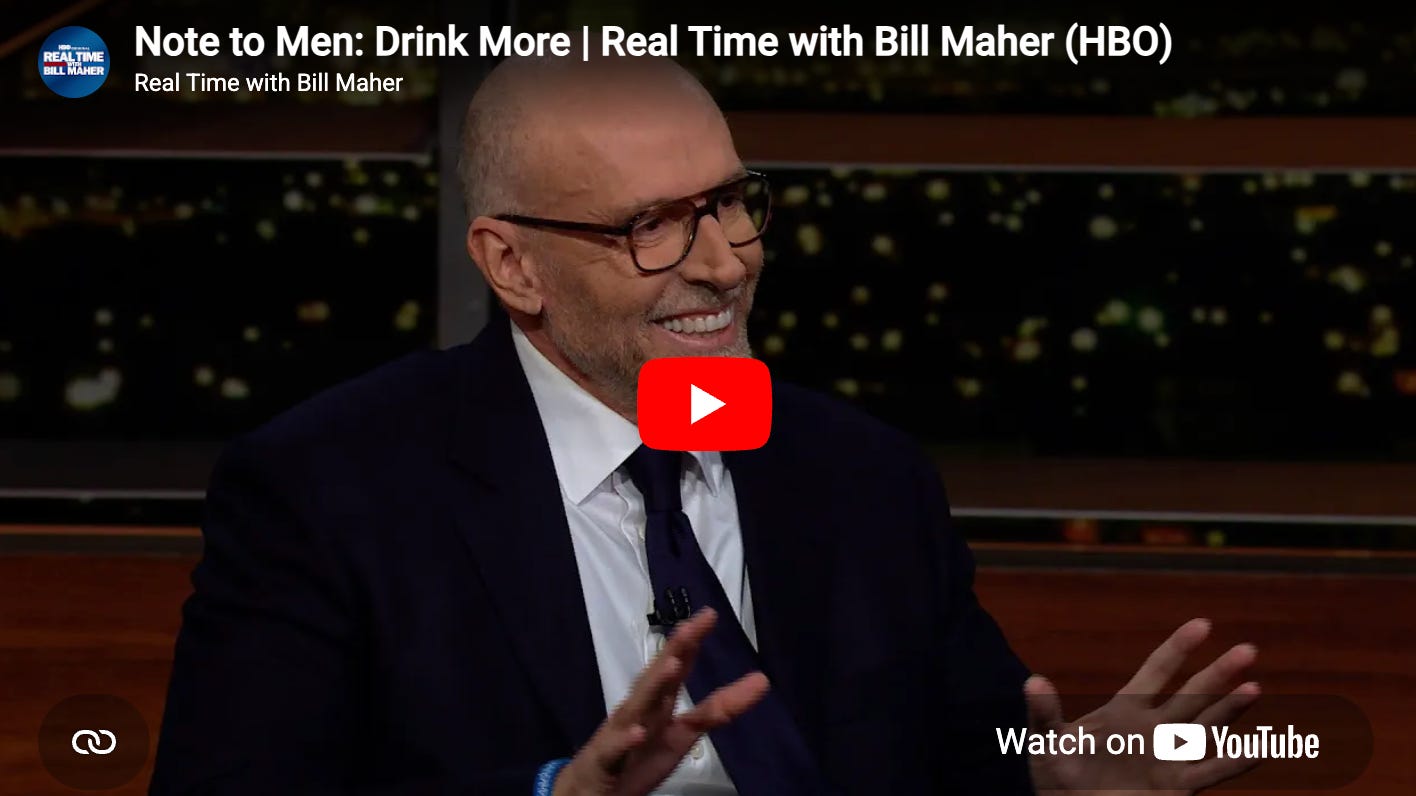
The absurdity of Galloway’s argument is matched only by his smugness. Scott should spend a few hours in an ER, an ICU, or a morgue & see what alcohol actually does to people.
Of course, he won’t.
It’s easier to remain insulated from the consequences while delivering contrarian takes about the virtues of drinking than it is to grapple with the wreckage alcohol leaves behind. A true academic, indeed.
Alcohol contributes to millions of deaths globally every year. It destroys families, fuels violence, fills hospitals, ruins careers, impairs judgment, creates addiction & damages nearly every organ system in the human body.
Yet somehow it remains the one drug people feel obligated to defend.
What fascinates me isn’t that people drink…human beings have always sought altered states & always will. What’s astounding is how aggressively some people feel compelled to defend this particular drug.
But it gets clicks & that’s all they care about.
The louder those defenses become, the more they sound like the arguments people make when they can feel the culture beginning to change.
Which raises an interesting question.
If Alcohol Were Invented Tomorrow
At some point, I know someone will respond with:
“But I drink & my life is great.”
If you’ve arrived at the decision to consume alcohol consciously, more power to you. I would never judge someone for using drugs…doing so would make me the world’s biggest hypocrite.
My observation is that most people didn’t arrive at that decision consciously. Alcohol is so deeply embedded in culture, movies, TV, dating, sports, work, celebrations & social life that many people never stopped to examine the relationship at all.
A simple heuristic:
Imagine alcohol were introduced tomorrow. It wasn’t featured in movies or TV. It wasn’t available at 4 different businesses within 3 miles of your home. You knew it would disrupt sleep, accelerate aging, damage skin quality, impair recovery, hurt athletic performance, increase the risk of numerous diseases, and, most importantly, impair judgment every time you used it. Every interaction with the drug would carry the possibility of saying or doing something you later regretted. Sometimes catastrophically.
Would you still choose to bring it into your life? Some people would answer yes. Fair enough.
But a nontrivial percentage of people reading this would answer no, while continuing to drink anyway. That’s the power of culture. The most influential drugs are the ones we never think to question.
The Cigarette Lesson
One of the easiest ways to overestimate how permanent culture is is to forget how quickly it changes.
I was 11 years old when smoking on airplanes was finally banned in 1994. I still remember ashtrays built into the armrests & seatbacks. At the time, cigarettes weren’t some fringe habit…they were woven into daily life. Restaurants, offices, airports, even hospitals all had smoking sections.
People smoked almost everywhere.
If you had told someone in 1994 that, within my lifetime, smoking would become socially unacceptable in most settings, they would have laughed.
Alcohol occupies a similar position today. It is so deeply embedded in culture that many people struggle to imagine a future where it is no longer the default drug for socializing, celebrating, dating, networking, relaxing or coping.
Yet I suspect that future is already arriving. Not evenly & not everywhere…the shift will be highly asymmetrical.
In LA & Austin, I’ve attended parties where nobody was drinking. Mushroom chocolates circulated instead of hors d’oeuvres, 2C-B had become what cocaine was to an earlier generation, MDMA was available for those who chose to participate.
I don’t expect that scene to arrive in Buffalo or Green Bay anytime soon. Cultural change rarely spreads uniformly…it starts in a handful of cities, among a handful of subcultures, before gradually moving outward.
But if I had to bet on the future, I wouldn’t bet on alcohol. I’d bet on a world increasingly shaped by Cannabis, Psychedelics & an entirely new generation of designer compounds accelerated by AI & modern drug development.
The question isn’t whether the culture around intoxication will change. It’s whether we’re early enough in the transition to recognize it while it’s happening.

The Future Is Choice
I don’t think alcohol disappears. People will continue drinking for the same reason people still smoke cigarettes. Some enjoy it, some don’t care about the risks & some simply prefer it. Nothing inherently wrong with that.
What I think disappears is alcohol’s privileged status:
- The assumption that every celebration requires it.
- Every first date requires it.
- Every networking event requires it.
- Every vacation requires it.
- Every difficult emotion requires it.
For most of modern history, alcohol wasn’t simply a drug…it was the drug.
That no longer appears to be true.
And when I look at the intensity with which writers, academics, influencers & public intellectuals are rushing to defend alcohol, I don’t see evidence of cultural strength.
I see the same thing that appears whenever a dominant institution begins losing its grip: anxiety, pushback & desperate attempts to defend the status quo.
The future isn’t sobriety…the future is choice. And for the first time in a very long time, more people are realizing they have one.